
Surface-to-volume ratio
The fraction of a particle's atoms that sit on its surface — the mechanism behind most nanoscale behaviour.
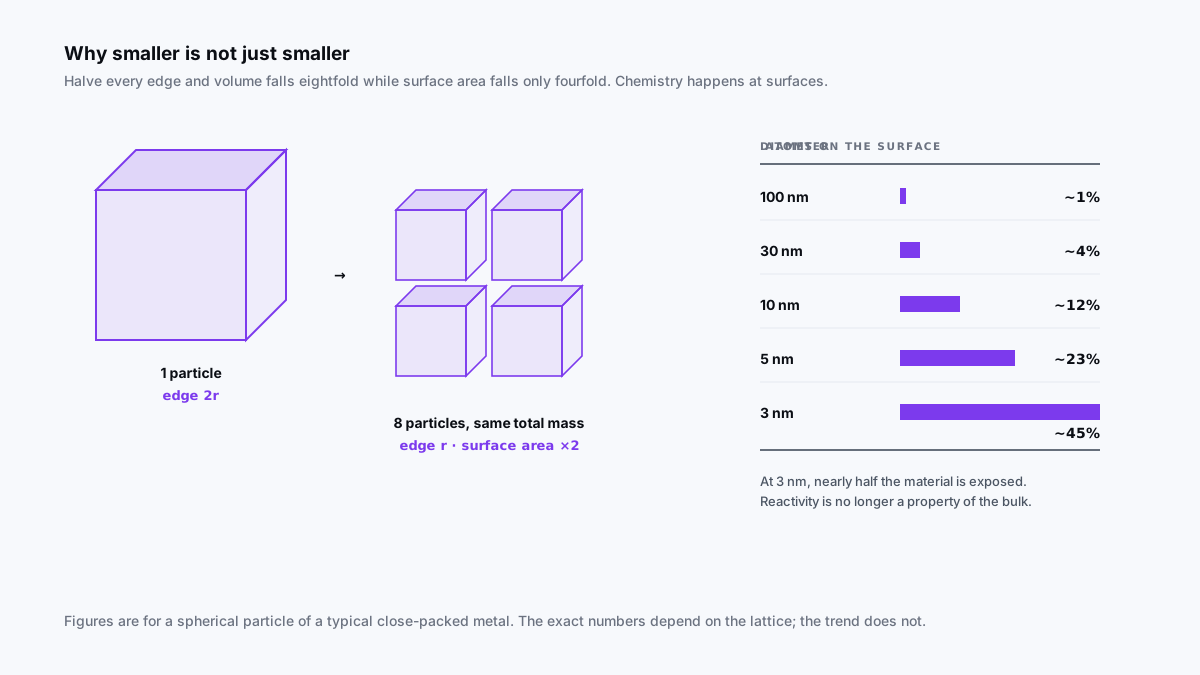
Halve every edge of a cube and its volume falls eightfold while its surface area falls only fourfold. Repeat that enough times and surface atoms go from negligible to dominant: about 1% of a 100 nm particle, around 45% of a 3 nm one.
Since chemistry happens at surfaces, reactivity can shift by orders of magnitude with no change to composition at all.
Where this comes up
Articles that define surface-to-volume ratio in context.
How small is a nanometre, really?
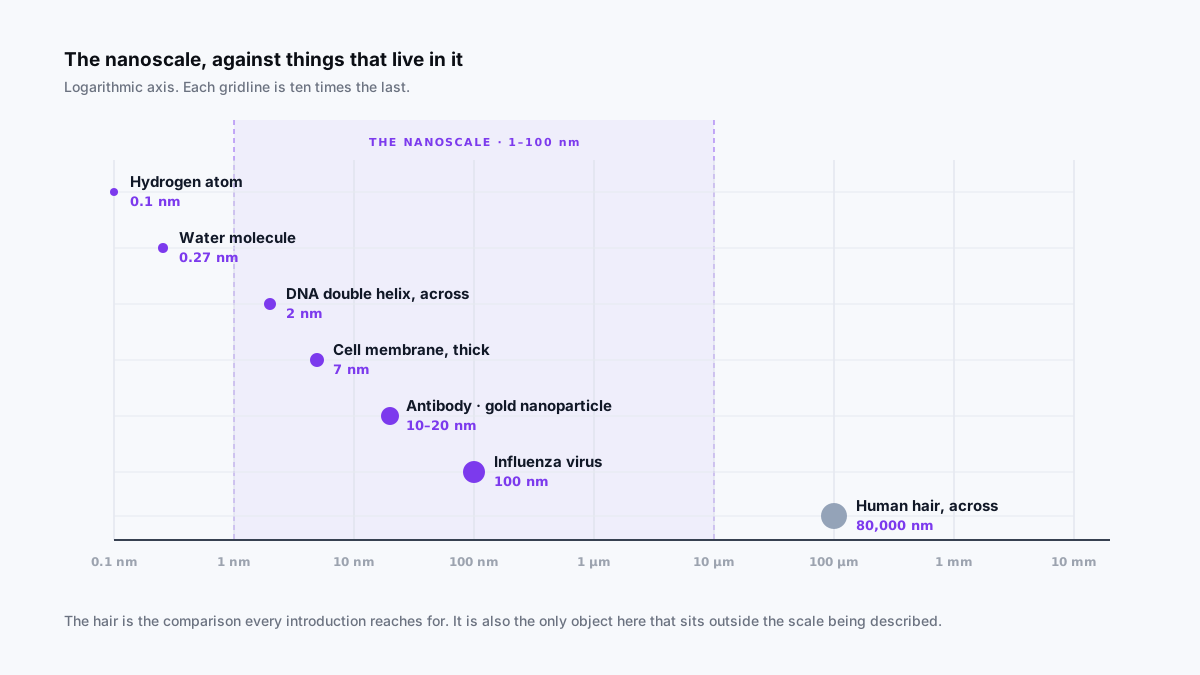
The human-hair comparison tells you nothing useful. Six anchors at the right order of magnitude, and the two mechanisms that make small materials behave differently.
What is Nanotechnology?
Nanotechnology is defined by scale rather than substance. Here is what changes between 1 and 100 nanometres, why it changes, and why a nanoparticle of a familiar material can be a genuinely new one.