
Quantum confinement
What happens when a particle is small enough that its electrons' allowed energy levels separate into discrete steps.
An electron confined to a few nanometres behaves like one in a small box: the permitted energies spread apart. Make the box bigger and they close up again.
This is why a quantum dot's colour is set by its diameter rather than its chemistry, and it is the clearest demonstration that nanoscale materials are not simply smaller versions of themselves.
Where this comes up
Articles that define quantum confinement in context.
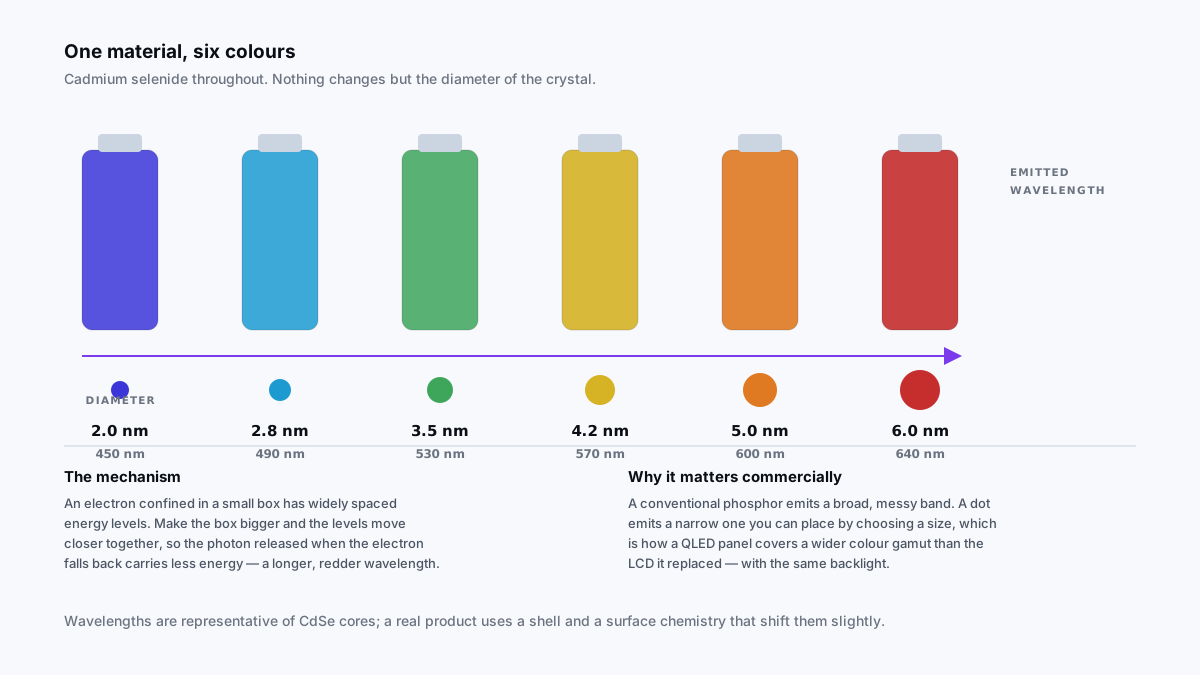
Quantum dots: from lab curiosity to your television
Why a quantum dot's colour is set by its size, and why the journey from a 1981 observation to a shipping display took three decades of manufacturing rather than physics.
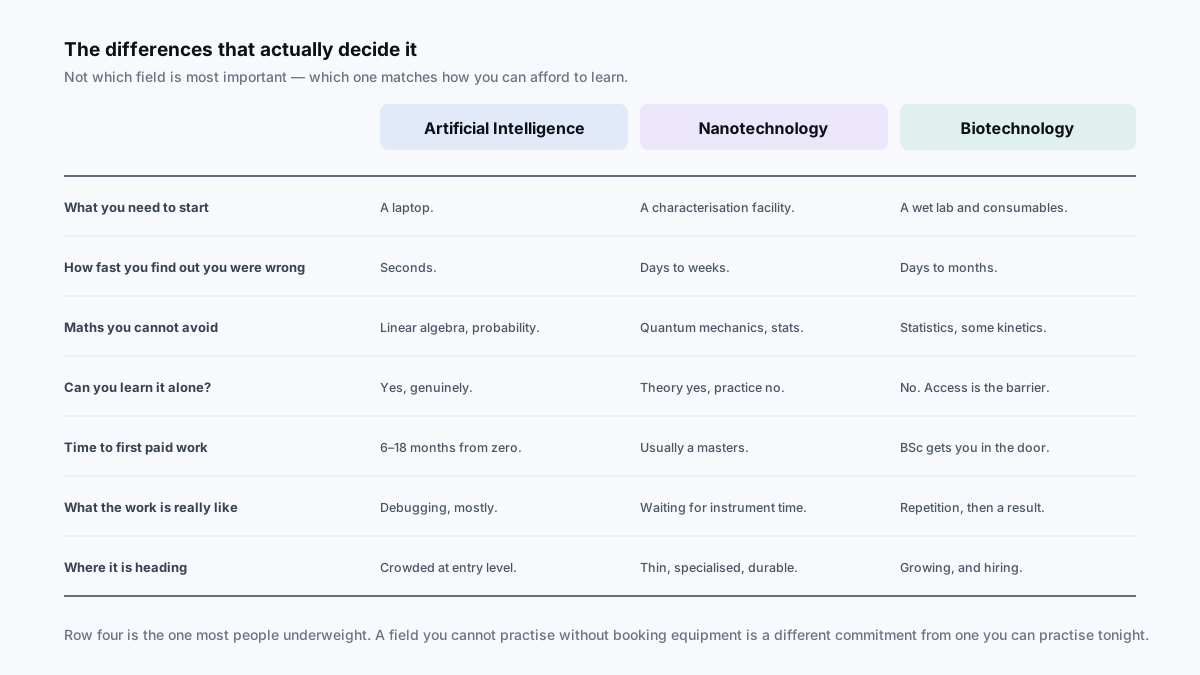
Which deep-science domain should you start with?
AI, nano and bio compared on the axes that decide it in practice: what you need to start, how fast the feedback comes, and whether you can practise without a facility.
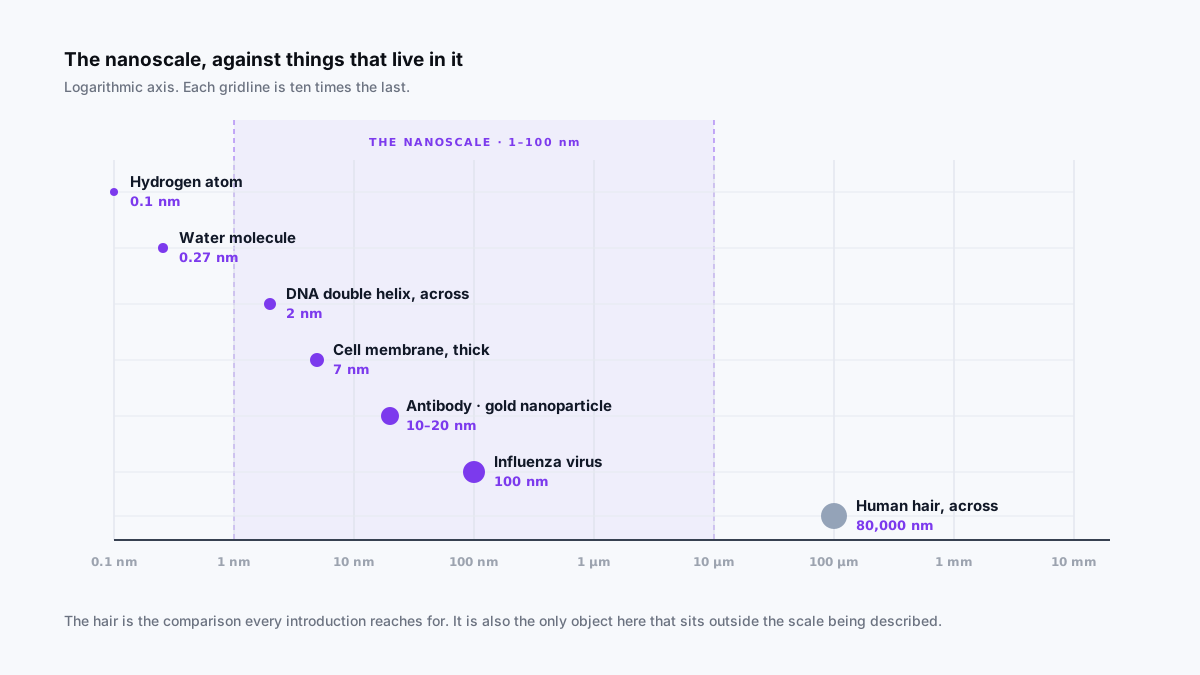
What is Nanotechnology?
Nanotechnology is defined by scale rather than substance. Here is what changes between 1 and 100 nanometres, why it changes, and why a nanoparticle of a familiar material can be a genuinely new one.