A gene-editing system that uses a short guide RNA to find one address in a genome and an enzyme to cut it there.
Cutting DNA was never the hard part — restriction enzymes have done it since the 1970s. What CRISPR changed is addressing: the target is specified by a 20-base RNA sequence you can order, rather than by engineering a new protein for every site.
What happens after the cut is up to the cell's repair machinery, not the tool.
Articles that define crispr in context.
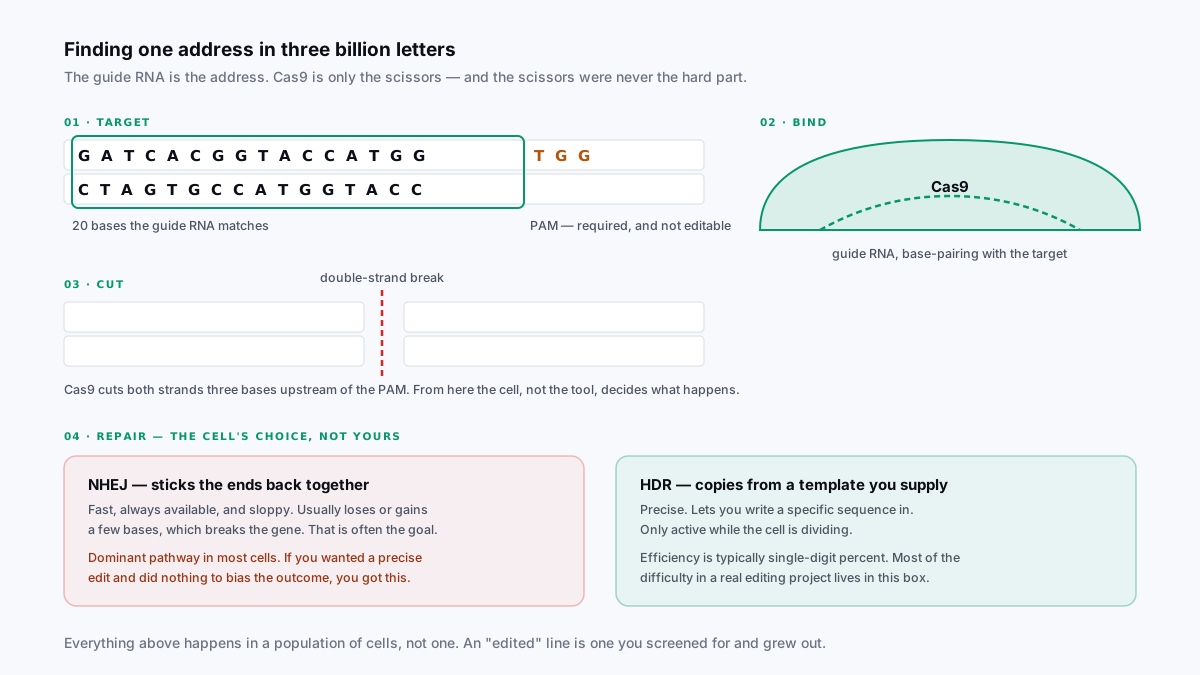
How CRISPR finds one address in three billion letters, why the scissors were never the innovation, and why a precise edit is a screening campaign rather than an operation.
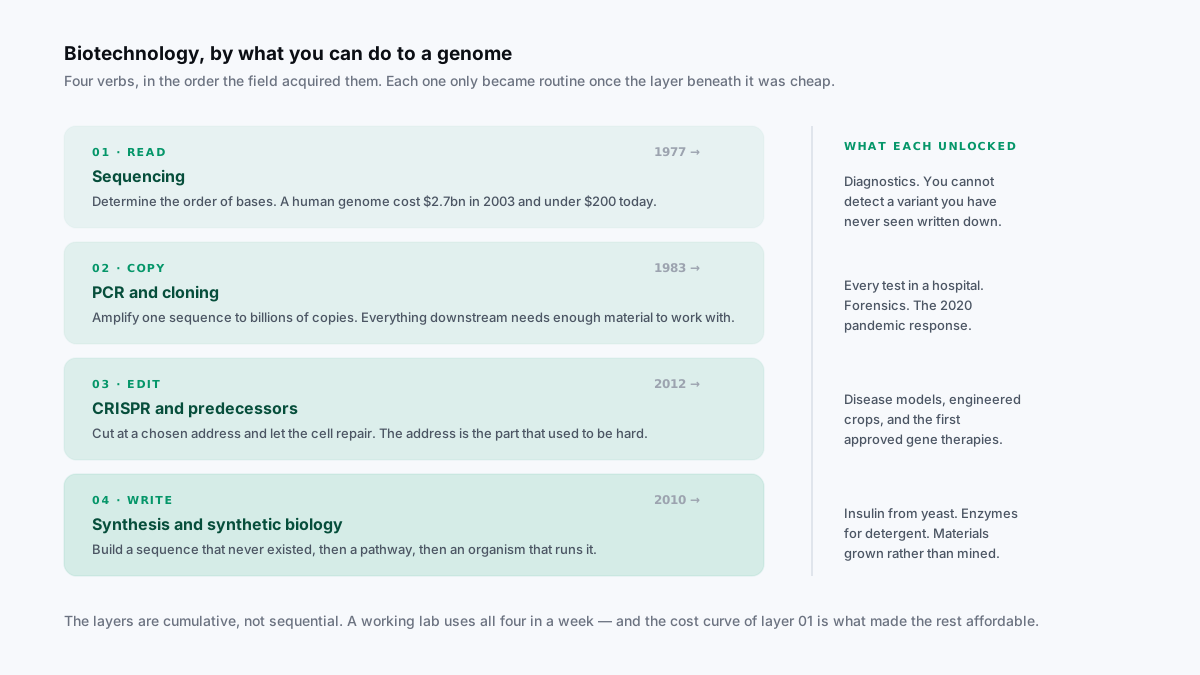
Biotechnology explained through the four things you can now do to a genome, the order the field acquired them, and what each one unlocked.