
AI/ML for Scientific Discovery Using PyTorch and JAX
AI/ML for Scientific Discovery Using PyTorch and JAX is a Moderate-level, 3 Days online program by NSTC. Master AI/ML for scientific discovery, PyTorch, and JAX through hands‑on projects, real datasets, and expert mentorship.
- ModeRecorded Lectures
- LevelIntermediate
- Duration3 Days (60-90 Minutes each day)
| Attribute | Detail |
|---|---|
| Format | Recorded Lectures |
| Level | Intermediate |
| Duration | 3 Days (60-90 Minutes each day) |
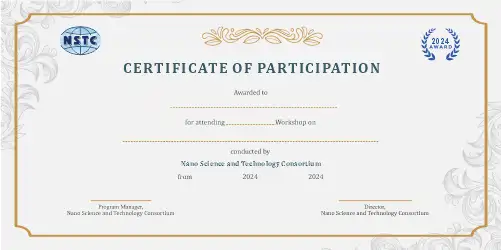
| Certification | e-Certification + e-Marksheet |
| Fee | Free |
| Tools | PyTorch JAX Optax NumPy SciPy |
About the AI/ML for Scientific Discovery Using PyTorch and JAX Course
AI/ML for Scientific Discovery Using PyTorch and JAX is a professional training program that introduces learners to artificial intelligence and machine learning techniques for modern scientific research.
You will learn how to leverage AI/ML models for data‑driven discovery, pattern recognition, prediction, simulation, and optimization across domains such as chemistry, materials science, and physics.
Program Highlights
• Comprehensive coverage of AI/ML for Scientific Discovery Using PyTorch and JAX from fundamentals to advanced applications
• Hands-on projects and real-world case studies in AI/ML
• Expert-curated curriculum aligned with current industry standards
• Access to recorded lectures and e-LMS platform for flexible, self-paced learning
• e-Certification and e-Marksheet upon successful completion
• Dedicated mentor support and interactive doubt-clearing sessions
• Practical experience with tools: PyTorch, JAX, Optax, NumPy
• Career-oriented training for academic and professional growth in AI/ML
Course Curriculum
Module 1: Day 1 – Scientific ML Foundations & PyTorch‑Based Property Prediction
- Explore AI/ML roles in scientific discovery and inverse design
- Prepare and visualize scientific datasets (molecular, materials, simulation)
- Implement tensor representations and automatic differentiation in PyTorch
- Design neural networks for property prediction
Module 2: Day 2 – Physics‑Informed Neural Networks & Surrogate Modeling
- Integrate physics‑based loss functions into neural networks
- Encode differential equations, boundary conditions, and conservation laws
- Build surrogate models for expensive simulations
- Perform parameter estimation and inverse modeling
Module 3: Day 3 – JAX for Differentiable Scientific Computing & Optimization
- Utilize JAX transformations (grad, jit, vmap) for high‑performance ML
- Create differentiable scientific computing pipelines
- Optimize parameters with Optax‑based workflows
- Compare PyTorch and JAX for research workloads